The Premier Professional Tool Rivalry
Milwaukee and DeWALT have competed for professional tool market dominance for decades, and in 2026 the competition is genuinely the closest it has ever been. Both brands produce tools that professional tradespeople trust with their livelihoods. Both have deep battery ecosystems covering 200+ tools. Both have earned multi-year relationships with contractors, electricians, plumbers, and carpenters who have standardized their entire operations on one platform. Choosing between them is not choosing between good and bad — it’s choosing between two different engineering philosophies that each have specific strengths.
This comparison covers every major dimension: innovation, battery platform architecture, performance by category, build quality, storage systems, trade preferences, and the decision framework that helps professionals make the right long-term choice.
Innovation and Technology Leadership
Milwaukee leads in electronic sophistication by a consistent and meaningful margin. The pattern is clear: Milwaukee introduces a feature, competitors respond 12–24 months later. POWERSTATE application-specific brushless motors, REDLINK PLUS three-way communication, ONE-KEY GPS tracking and remote tool locking, DRIVE CONTROL multi-mode impact management, ANTI-KICKBACK electronic grinder reaction control, FORGE extreme-condition battery chemistry. Each of these was a Milwaukee innovation before competitors incorporated equivalent features.
DeWALT leads in battery architecture innovation. FLEXVOLT’s automatic 20V/60V switching is a uniquely elegant engineering solution — no competitor has replicated the dual-voltage backward-compatible battery design that allows a single battery to optimize for both 20V MAX tool operation and 60V FLEXVOLT high-power operation. POWERSTACK’s pouch-cell architecture delivers meaningful improvements in battery compactness and weight. These innovations have focused on the power delivery system rather than electronic tool features, reflecting a different engineering priority than Milwaukee’s approach.
Neither approach is universally superior. For professionals who value electronic protection, fleet management technology, and maximum performance extraction from 18V: Milwaukee leads. For professionals who value battery architecture advancement, high-voltage cordless capability, and platform economics: DeWALT leads.
Battery Platform Architecture
Milwaukee M18 + M12: M18 covers 200+ tools. HIGH OUTPUT batteries (8Ah, 12Ah) push performance to near-corded levels. FORGE chemistry extends cold-weather performance. M12 adds 100+ compact tools with unique trade-specific instruments that have no equivalent from any other brand — plumbing expansion tools, copper pipe cutters, inspection cameras, ratchets, and specialty automotive tools. The M12 ecosystem is Milwaukee’s most important competitive differentiator for the electrical, plumbing, HVAC, and automotive trades.
DeWALT 20V MAX + FLEXVOLT: 200+ tools on 20V MAX with full cross-compatibility. FLEXVOLT extends to 60V for high-power applications with batteries backward-compatible with all 20V MAX tools. XTREME 12V adds approximately 50 compact tools on a separate format — significantly less developed than Milwaukee’s M12 platform. POWERSTACK batteries deliver the same energy in a smaller, lighter package than traditional batteries.
The key platform difference: Milwaukee wins on compact trade-specific tool depth (M12 vs XTREME 12V). DeWALT wins on high-voltage cordless capability (FLEXVOLT 60V vs no Milwaukee equivalent). For most tradespeople, the M12 specialty tool advantage matters more than FLEXVOLT — unless you specifically need 60V circular saw, table saw, or grinder performance.
Performance Benchmarks by Category
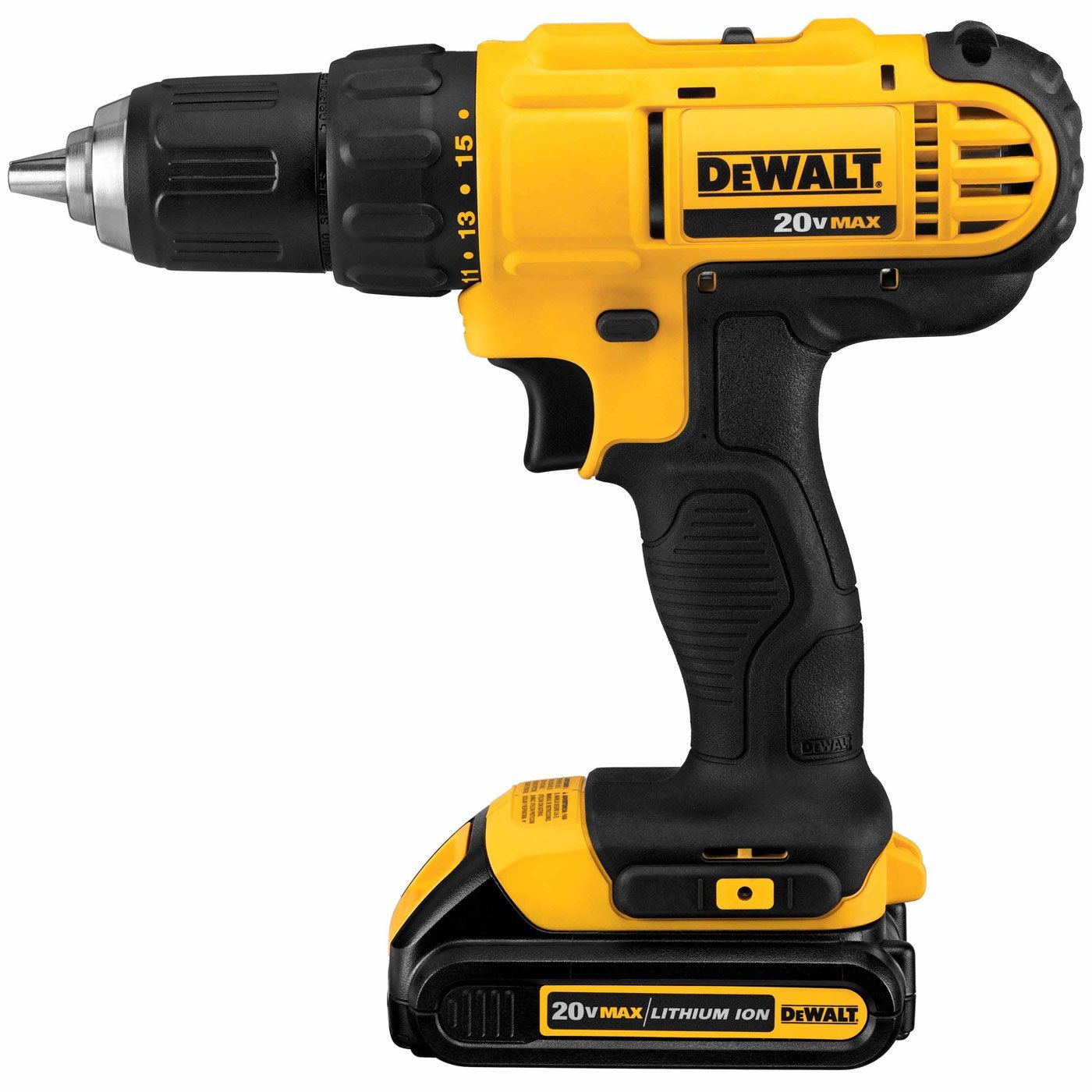
Drill/Driver: Milwaukee M18 FUEL 2904-20 delivers 1,200 in-lbs from an all-metal chuck with REDLINK PLUS thermal management. DeWALT DCD800 delivers 650 in-lbs in a 1.87-lb body at 6.9 inches. Milwaukee wins on torque (nearly 2:1 advantage). DeWALT wins on compact weight and body length. These serve different applications: Milwaukee for sustained structural driving, DeWALT for overhead and tight-space work. Neither is the objectively better drill — the better choice depends on application.
Impact Driver: Milwaukee M18 FUEL 2953-20 at 2,000 in-lbs with 4-mode DRIVE CONTROL vs DeWALT DCF850 at 1,825 in-lbs in a 4.4-inch body. Milwaukee leads on peak torque by 175 in-lbs; DeWALT is marginally more compact. For high-volume structural fastening: Milwaukee. For compact all-day driving: DeWALT. Practical difference is modest for general applications where both perform within seconds of each other per fastener.
Circular Saw: DeWALT DCS575 FLEXVOLT at 8,000 RPM on 60V vs Milwaukee M18 FUEL 2732-20 at 5,800 RPM. DeWALT wins clearly on cutting power and speed when FLEXVOLT battery is available. On comparable 18V vs 20V platforms, the difference narrows. For maximum cutting performance: DeWALT FLEXVOLT. For M18 platform users: Milwaukee handles all standard construction cutting competently.
Miter Saw: DeWALT DWS780 with XPS LED shadow line vs Milwaukee 6955-20 with linear ball bearing slide system. The XPS system provides a practical daily advantage — no calibration drift, no battery, always perfectly aligned. The Milwaukee’s rail system provides excellent cut consistency in high-production environments. For most finish carpenters: DeWALT DWS780. For production shops: Milwaukee earns consideration.
Rotary Hammer: Milwaukee M18 FUEL 2712-20 at 2.0 joules vs DeWALT DCH133 at 1.7 joules. Milwaukee drills anchor holes approximately 15% faster in standard concrete tests. For crews drilling dozens of anchors daily: Milwaukee. For occasional concrete work: DeWALT’s lower impact energy is adequate and the tool costs less.
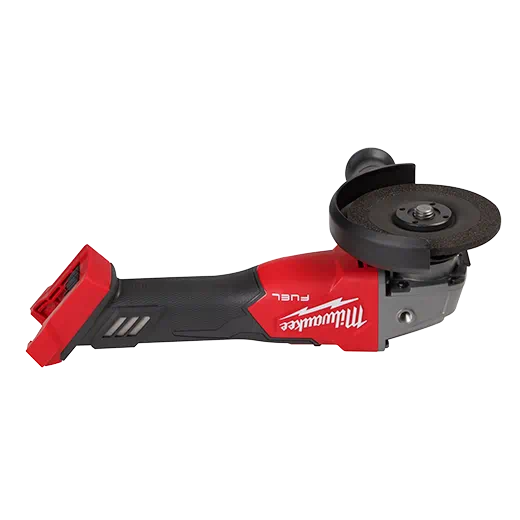
Angle Grinder: Milwaukee M18 FUEL 2780-20 at 10,000 RPM with ANTI-KICKBACK vs DeWALT DCG418 FLEXVOLT at 9,000 RPM with electronic clutch. Milwaukee leads on RPM; DeWALT FLEXVOLT leads on sustained power output for heavy material removal. Both have electronic kickback protection. Application determines the winner: sustained grinding (DeWALT FLEXVOLT), cutting and precision (Milwaukee).
Framing Nailer: Milwaukee M18 FUEL 2744-20 (battery-only, no fuel cell, excellent cold-weather performance) vs DeWALT DCN692 (dual-fuel battery + fuel cell, fastest sequential fire). Milwaukee’s battery-only mechanism eliminates the fuel cell consumable cost and performs more consistently in cold weather where fuel cell chemistry slows. DeWALT’s dual-fuel system fires slightly faster sequentially. Both perform equivalently in bump-fire mode for production framing.
Build Quality and Durability
Both brands build to professional standards that withstand years of daily jobsite use. Milwaukee tools feel more robust in hand — the all-metal chucks on M18 FUEL drills, the heavy-gauge construction of PACKOUT cases, the solid feel of the FUEL impact driver body. DeWALT tools are built to excellent standards but with a more utilitarian feel that prioritizes function over the perception of premium construction. Neither brand has a meaningful durability advantage at the professional tier — both honor 3-year warranties (Milwaukee offers 5 years on FUEL tools) and both have extensive service center networks.
Storage Systems
Milwaukee PACKOUT (IP54, 250-lb capacity per case, positive locking system, truck rack integration) vs DeWALT TOUGHSYSTEM 2.0 (IP65, weather-tight sealing, excellent ergonomics). PACKOUT has wider professional adoption, more ecosystem accessories, and superior vehicle integration for contractors moving tools between sites. TOUGHSYSTEM 2.0 has superior weather protection (IP65 vs IP54) for the most demanding outdoor environments. Both are professional standards; PACKOUT leads in overall ecosystem development and adoption.
Fleet Management and Connectivity
ONE-KEY is Milwaukee’s clearest competitive advantage at the fleet management level. GPS asset tracking, remote tool locking, usage reporting by tool and worker, and maintenance scheduling based on actual runtime hours. For contractors managing $50,000+ in tools across multiple sites, ONE-KEY’s theft deterrence and recovery capability alone often justifies the Milwaukee platform choice. DeWALT’s TOOL CONNECT provides basic Bluetooth tracking but lacks the depth, GPS capability, and fleet management sophistication of ONE-KEY.
Trade Preferences in 2026
Electrical: DeWALT leads (compact DCD800 dominates electrical toolboxes). Plumbing: Milwaukee leads significantly (M12 ProPEX, copper cutter). HVAC: Milwaukee leads (M12 specialty tools). Automotive/mechanical: Milwaukee dominates (M12 ratchets, impact wrenches). Framing: roughly split. Finish carpentry: DeWALT leads (DWS780 standard). General contracting: roughly split. Woodworking: Makita leads both brands.
Making the Decision
Choose Milwaukee for: plumbing, HVAC, automotive, and mechanical trades; M12 compact specialty tools; ONE-KEY fleet management; maximum M18 FUEL torque; 5-year FUEL warranty. Choose DeWALT for: electrical trade preference; FLEXVOLT high-power cordless; compact lightweight tools (DCD800); FLEXVOLT battery backward-compatibility economics; IP65 TOUGHSYSTEM storage.
If the trade preference doesn’t clearly favor one brand for your work, visit Pro Tools Hub and let our team help you build the right platform for your specific applications and long-term tool investment strategy.