The Foundation of Every Professional Tool Kit
A contractor’s cordless drill runs harder, more hours, and in more varied conditions than almost any other tool in the kit. It drills pilot holes through stud framing, drives structural lag bolts, mixes materials, and handles precision work in finished surfaces — sometimes within the same hour. Getting this decision right matters more than most single tool purchases, because the drill’s battery platform determines which 200+ other tools you can add cost-effectively over the next decade.
This guide focuses on what professional contractors actually need from a drill in 2026 — not which tool has the highest spec sheet number, but which drill performs best under the real conditions of sustained professional use.
What Professional Contractors Need (Not What Specs Say)
Torque matched to the work: For most drilling and standard driving applications, 500–800 in-lbs is entirely sufficient. Drilling through wood studs, driving 3-inch deck screws, handling cabinet hardware — none of these applications require 1,200 in-lbs. Where higher torque matters is sustained structural fastening (lag bolts, timber screws, large anchors), drilling into steel, and hammer drilling into dense concrete. Spec out for your actual work, not for the maximum scenario you might occasionally encounter.
Weight for the work duration: An electrician driving overhead conduit work all day feels the difference between 1.87 lbs and 2.1 lbs more acutely than a framing contractor who sets the drill down between each fastener. Know how you use your drill throughout a day and weight accordingly. The lightest professional drill often isn’t the best choice for heavy work, but it’s absolutely the right choice for overhead and repetitive light-duty applications.
All-metal chuck: Non-negotiable for professional use. Plastic-collar chucks provide less grip, wear faster under sustained high-torque loads, and can develop runout over time that affects bit centering. Every professional-grade drill from the major brands uses an all-metal keyless chuck; verify this when evaluating mid-range options.
Battery platform compatibility: The drill is likely your first major tool purchase in a battery platform. Choose based on the full range of tools you’ll need over the next 3–5 years — not just the drill. A drill on Milwaukee M18 means your future circular saw, grinder, and nailer can all run the same batteries. That platform economics argument matters more than any individual spec comparison between drill models.
Brushless motor: The baseline standard for professional tools in 2026. Brushless motors at 2–3x the service life of brushed alternatives, higher efficiency producing more runtime per charge, and better heat management under sustained loads. Any professional-tier drill from DeWALT, Milwaukee, or Makita will be brushless by default.
Top Picks for Contractors in 2026
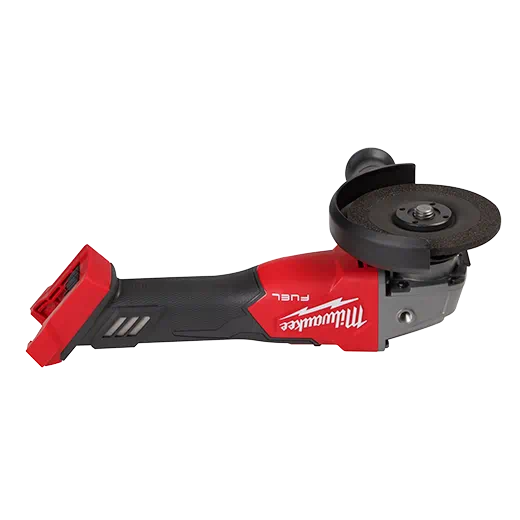
Milwaukee M18 FUEL 2904-20 — Best for Heavy Sustained Work
1,200 in-lbs of torque through an all-metal 1/2-inch chuck. POWERSTATE brushless motor engineered specifically for high-torque drilling and driving duty. REDLINK PLUS thermal management prevents overload and overheating under sustained back-to-back driving — the protection that matters when you’re driving 500 structural screws in a day rather than 50. At 2.1 lbs with a 5Ah battery, it’s not the lightest professional drill, but that weight reflects the all-metal construction and motor capability that sustains this performance level over years of daily use.
The M18 FUEL 2904 is the drill that professional contractors who push their tools hard consistently choose. Framers driving structural screws all day. Foundation contractors anchoring sill plates. Deck builders driving through hardwood decking into LVL beams. The 1,200 in-lbs torque advantage over compact alternatives becomes tangible in sustained heavy-duty applications. Paired with Milwaukee HIGH OUTPUT 8Ah batteries, this drill operates at near-corded performance levels for extended runs.
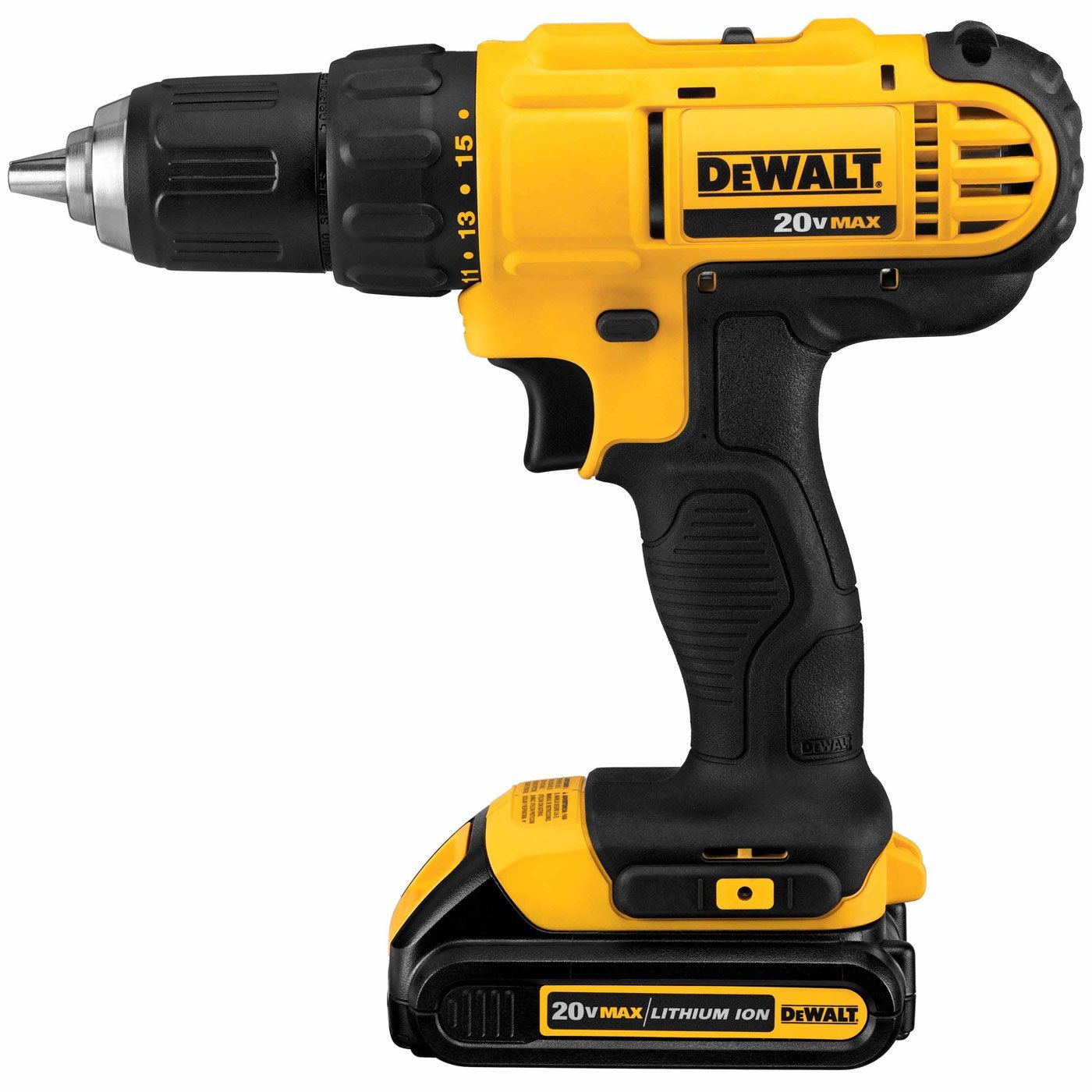
DeWALT DCD800 — Best for Compact and Overhead Work
650 in-lbs of torque in a 1.87-lb, 6.9-inch body. The lightest professional-class drill available from either major brand. Brushless motor with variable speed up to 2,000 RPM. LED work light positioned to illuminate the actual bit-to-material contact point rather than casting a shadow over it. Belt clip included and positioned to balance the drill when holstered.
The DCD800 is the dominant choice in the electrical trade for a specific reason: it fits. Panel spaces, overhead junction box locations, above-ceiling conduit runs, and tight wall cavity drilling all require a drill that fits in spaces where longer tools are physically impossible. The DCD800’s 6.9-inch body is 0.5 inches shorter than most M18 tools and 1+ inch shorter than mid-range alternatives. For electricians, HVAC technicians, and any trade doing significant overhead work, this size difference is felt every single day.
Makita XFD14Z — Best for Precision Work and Woodworking
530 in-lbs of torque in a 7.1-inch body, with the industry’s best clutch calibration. The 16-position clutch offers genuinely distinct and useful settings throughout the range — particularly in positions 1 through 6, where woodworking and cabinet installation applications actually live. DeWALT and Milwaukee clutches often have indistinct low positions that provide no practical control resolution below position 5 or 6.
For cabinet installers, furniture makers, and finish carpenters who drive screws in hardwood, MDF, and soft maple daily, this clutch precision is the spec that determines whether work is done to quality or not. Overdriving a pocket screw into cabinet-grade maple is a callback; the Makita’s clutch prevents it where competitors can’t.
The LXT platform’s 280+ tool compatibility makes the Makita the strongest platform choice for professionals who run a wide variety of tools and want a single battery ecosystem to cover all of them.
Milwaukee M18 FUEL 2904-20 with DCD996 Comparison — Adding Hammer Drill Capability
For contractors who regularly mix standard drilling and driving with concrete anchor work — attaching bottom plates to slabs, setting anchor bolts for equipment, and drilling into masonry — a hammer drill mode adds genuine versatility. DeWALT’s DCD996 delivers 820 UWO in hammer drill mode alongside 550 UWO in standard drill mode, covering both applications in a single 3-mode tool. Milwaukee’s M18 FUEL 2904-20 is not a hammer drill; concrete anchor work on the Milwaukee platform requires the dedicated DCH133 SDS-Plus rotary hammer or stepping up to the M18 FUEL 2904 hammer drill model.
Battery Strategy for Professional Drill Use
Professional drilling and driving is battery-intensive. Plan for a minimum of 3 batteries per drill on an active crew: one in the tool, one on the charger, one in reserve. For heavy-duty structural work, HIGH OUTPUT or FLEXVOLT batteries significantly reduce thermal throttling during extended back-to-back driving runs — the extra cost is justified by sustained performance under demanding loads.
Invest in a rapid charger (30-minute charge cycles) rather than standard chargers for professional use. DeWALT’s DCB115 and Milwaukee’s 48-59-1850 both deliver 60-minute charges for 5Ah batteries — acceptable for moderate use. For crews cycling through batteries continuously, the 30-minute rapid chargers reduce battery downtime to a level that doesn’t interrupt production.
Accessories That Multiply Drill Performance
Quality bits matter as much as the drill itself. Impact-rated bits from Milwaukee SHOCKWAVE, DeWALT IMPACT READY, and Makita Impact Black are engineered for the torque profiles of professional drills — standard bits break under professional driving loads. A 40-piece professional bit set costs $25–40 and covers every fastener head type encountered in construction. Replace frequently — dull bits require more effort from the drill and strip fastener heads.
A right-angle attachment (Milwaukee 2467-20, DeWALT DCD740) converts any drill/driver to right-angle configuration for framing, plumbing, and electrical rough-in in existing construction. A depth-stop collar ensures consistent pilot hole depths for screw installation in production applications.
Find the Milwaukee M18 FUEL, DeWALT DCD800, Makita XFD14Z, and all professional drill accessories at Pro Tools Hub. Our team can help you choose the right drill and battery strategy for your specific trade and workflow.