The Most Important Tool Decision You’ll Make
DeWALT and Milwaukee are the two most dominant professional tool brands in North America, and choosing between them is effectively choosing your tool ecosystem for the next decade. Battery platforms create switching costs — once you’ve invested in 6 M18 batteries and 12 Milwaukee tools, migrating to DeWALT means either abandoning that investment or managing two parallel ecosystems. This decision deserves a thorough analysis, not a brand preference or a sale price.
Both brands produce exceptional tools. Both have earned the trust of professional tradespeople through real-world performance rather than marketing. The differences between them are real but specific to certain performance categories and trade applications. Here is the most comprehensive comparison available.
Battery Platform Architecture
DeWALT 20V MAX + FLEXVOLT: The 20V MAX core platform covers 200+ tools with full cross-compatibility. POWERSTACK battery technology delivers more energy in a smaller, lighter form factor. FLEXVOLT extends the platform to 60V for high-power applications (circular saws, table saws, grinders, rotary hammers) with batteries that are backward-compatible with all 20V MAX tools. XTREME 12V adds approximately 50 ultra-compact tools on a separate battery format. The FLEXVOLT architecture is DeWALT’s single most important competitive advantage — no competitor offers the dual-voltage backward-compatible battery technology that FLEXVOLT provides.
Milwaukee M18 + M12: M18 covers 200+ tools with HIGH OUTPUT batteries (8Ah, 12Ah) and FORGE chemistry for extreme-condition performance. No high-voltage platform equivalent to FLEXVOLT — M18 HIGH OUTPUT is the performance ceiling. M12 adds 100+ compact tools on a separate 12V battery format, with a unique depth of trade-specific tools (plumbing expanders, copper cutters, inspection cameras, ratchets) that have no equivalent from any other brand at any voltage. The M12 ecosystem is Milwaukee’s single most important competitive differentiator for the electrical, plumbing, HVAC, and automotive trades.
Platform verdict: DeWALT leads for high-power cordless applications (FLEXVOLT 60V). Milwaukee leads for compact trade-specific tools (M12 depth). For most professionals, the trade-specific tool ecosystem available on their primary platform matters more than high-voltage capability.
Performance Head-to-Head by Category
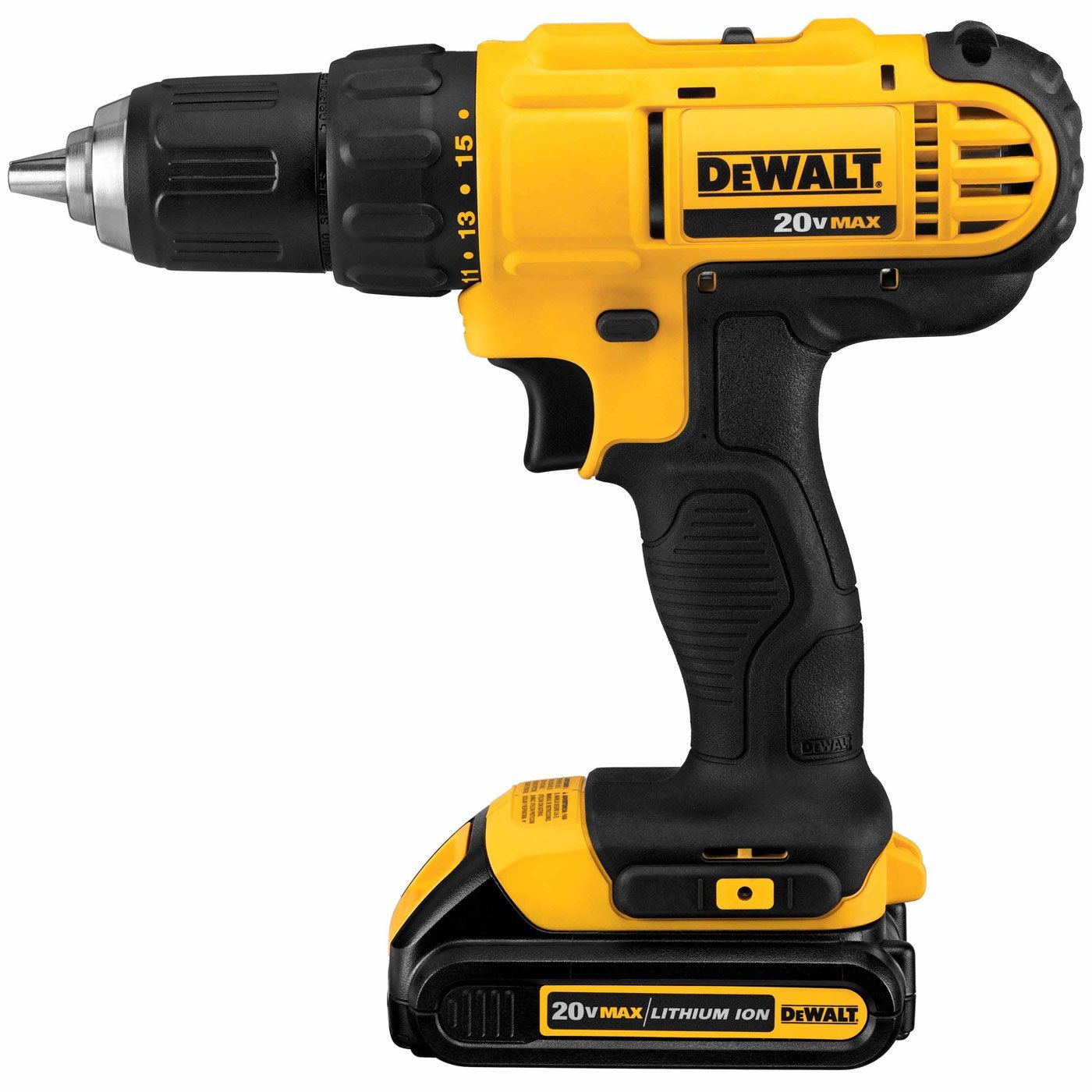
Drill/Driver: Milwaukee M18 FUEL 2904-20 delivers 1,200 in-lbs of torque from an all-metal chuck. DeWALT DCD800 delivers 650 in-lbs in a 1.87-lb, 6.9-inch compact body. Milwaukee wins on torque by a significant margin; DeWALT wins on compact weight and body length. For sustained structural driving and heavy-duty drilling: Milwaukee. For overhead work, tight-space applications, and trades where tool weight matters across a full day: DeWALT. Both are professional-grade — the choice should follow application requirements.
Impact Driver: Milwaukee M18 FUEL 2953-20 at 2,000 in-lbs with 4-mode DRIVE CONTROL vs DeWALT DCF850 at 1,825 in-lbs in a 4.4-inch compact body. Milwaukee leads on peak torque by 175 in-lbs; DeWALT is marginally more compact and lighter. For high-volume structural fastening (lag bolts, LedgerLOK, TimberLOK): Milwaukee. For compact all-day driving with precision mode for sensitive applications: DeWALT. The practical difference is modest for most general fastening — both perform equivalently for the majority of applications.
Circular Saw: DeWALT DCS575 FLEXVOLT on 60V delivers 8,000 RPM — matching or exceeding many corded saws and consistently outperforming Milwaukee’s M18 FUEL 2732-20 at 5,800 RPM under load. For framing, ripping hardwood, and applications where maximum cutting speed matters: DeWALT FLEXVOLT wins clearly. For M18-platform users who don’t want a separate FLEXVOLT battery: the Milwaukee M18 FUEL handles standard framing and construction cutting competently.
Miter Saw: DeWALT DWS780 with XPS shadow-line system vs Milwaukee 6955-20 with linear ball bearing slides. The DWS780’s XPS LED system provides a practical daily advantage over laser-based systems — no calibration drift, no battery replacement, perfect alignment with the actual cut path. The Milwaukee’s linear rail system provides exceptional cut consistency in high-volume production environments. For finish carpentry and general trim work: DeWALT DWS780. For production shops doing thousands of cuts per week: the Milwaukee’s rail precision earns consideration.
Rotary Hammer: Milwaukee M18 FUEL 2712-20 at 2.0 joules vs DeWALT DCH133 at 1.7 joules. Milwaukee delivers faster hole completion in hard concrete — approximately 15% faster in standard anchor hole tests. For crews drilling dozens of anchor holes daily: Milwaukee. For occasional concrete work mixed with standard construction: the DeWALT’s 18% lower impact energy is adequate and it costs less.
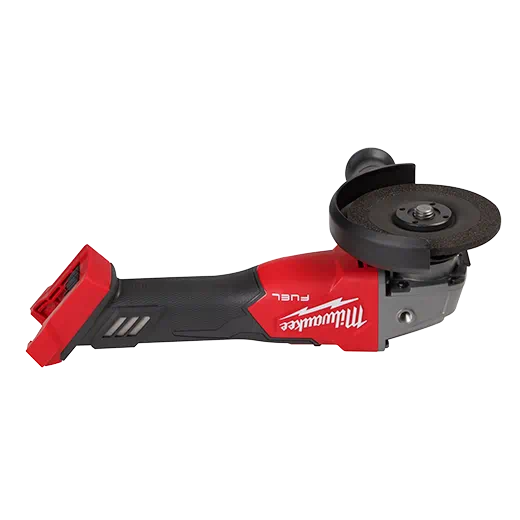
Angle Grinder: Milwaukee M18 FUEL 2780-20 at 10,000 RPM with ANTI-KICKBACK vs DeWALT DCG418 FLEXVOLT at 9,000 RPM with electronic clutch and kickback detection. Milwaukee leads on RPM; DeWALT leads on sustained power output on FLEXVOLT. Both have electronic kickback protection. For metal fabrication and sustained heavy grinding: DeWALT FLEXVOLT. For polishing, cutting, and applications where higher RPM helps: Milwaukee.
Electronic Features and Technology
Milwaukee leads in electronic sophistication by a meaningful margin. POWERSTATE application-specific motor engineering, REDLINK PLUS three-way communication, ONE-KEY fleet management with GPS tracking and remote locking, DRIVE CONTROL multi-mode management, and ANTI-KICKBACK reaction control represent a consistent pattern of technology investment that DeWALT hasn’t fully matched.
DeWALT leads in battery architecture innovation. FLEXVOLT’s automatic dual-voltage switching is a uniquely clever engineering solution. POWERSTACK’s pouch-cell architecture delivers meaningful improvements in battery form factor. TOOL CONNECT provides basic asset tracking but lacks ONE-KEY’s depth of fleet management capability.
For professionals who value maximum electronic protection and fleet management capability: Milwaukee. For professionals who prioritize battery architecture innovation and platform economics: DeWALT.
Storage Systems
Milwaukee PACKOUT (IP54, 250-lb capacity per case, truck rack integration, 250 lbs per case) vs DeWALT TOUGHSYSTEM 2.0 (IP65, excellent ergonomics, high weather protection). PACKOUT leads on vehicle integration and professional ecosystem depth. TOUGHSYSTEM 2.0 leads on weather protection (IP65 vs IP54) for the most demanding outdoor environments. Both are excellent — PACKOUT has wider professional adoption and more accessories, TOUGHSYSTEM 2.0 offers superior environmental sealing.
Trade Preferences
Electrical trade: split, with DeWALT and Milwaukee roughly equal in adoption. Plumbing: Milwaukee leads significantly due to M12 ProPEX and copper tools. HVAC: Milwaukee leads due to M12 specialty tools. Automotive and mechanical: Milwaukee dominates with M12 ratchets and impact wrenches. Framing: split, with DeWALT gaining ground via FLEXVOLT. Finish carpentry: DeWALT leads due to DWS780 miter saw dominance. General contracting: split.
The Decision Framework
Choose Milwaukee if you’re in plumbing, HVAC, automotive, or mechanical work; if you need M12 compact specialty tools; if ONE-KEY fleet management has value for your operation; or if maximum M18 FUEL torque is a priority for sustained structural work.
Choose DeWALT if you’re in the electrical trade (DeWALT is the dominant platform); if you need FLEXVOLT high-power cordless for heavy framing and structural applications; if compact tool weight matters for overhead and tight-space work; or if FLEXVOLT battery backward-compatibility economics appeal.
If you’re starting from scratch with no platform investment: visit Pro Tools Hub, tell us your trade, and we’ll help you choose the platform that serves your specific work best for the long term.