Why Home Backup Power Has Become Essential
Power outages are becoming more frequent and lasting longer. The combination of aging grid infrastructure, increased electrical demand from EV charging and heat pump adoption, and more intense storm events driven by climate patterns has extended average outage durations across most of the United States. A 2023 Department of Energy report found that weather-related outages had increased by more than 60% over the previous decade. For families dependent on refrigerated medication, home medical equipment, sump pumps in flood-prone basements, or simply avoiding food spoilage losses that routinely exceed $500 per extended outage — backup power has moved from luxury to practical necessity.
Choosing the right backup generator requires matching wattage output, fuel type, noise level, installation requirements, and ongoing maintenance obligations to your specific household needs and capabilities. This guide covers the complete decision process.
Step One: Honest Load Assessment
The most common generator purchase mistake is sizing based on what would be nice to run rather than what you actually need during an outage. Begin with critical loads — the items whose failure creates immediate problems:
Health and safety critical: Medical equipment (CPAP, oxygen concentrator, home dialysis), sump pump (basement flooding risk), well pump (no water without power), and heating system controls in cold climates.
Food preservation: Refrigerator (150W running / 600W starting) and freezer (100W running / 500W starting). A full refrigerator and freezer represent $500–$2,000 in food replacement after a 3-day outage. The generator investment often pays for itself in a single major outage prevented.
Climate control: Central AC compressor (3-ton unit: 4,500W running / 13,500W starting) for summer outages in hot climates. Furnace fan (600W running / 1,000W starting) for winter outages in cold climates. These loads are the biggest drivers of generator sizing — whether you need AC determines whether a 5,000W generator is adequate or a 10,000–15,000W unit is required.
Communication and lighting: LED lighting (200W for whole house), phone and device charging (150W), router and modem (25W). These loads are modest but critical for maintaining situational awareness and emergency communication during extended outages.
After listing each load with its running and starting watts, add all running watts together. Add the single highest starting watt load on top of the running total. That is your minimum generator output requirement. Add 20–25% margin to arrive at the right generator size.
Generator Types for Home Backup
Portable Conventional Generator (recommended for most homeowners): The most affordable and practical solution for the majority of residential backup power needs. Requires manual starting (or electric start), fuel storage, and a safe connection method to your home’s electrical system. Runs on gasoline, propane, or both (dual-fuel models). Output range: 3,500–17,500W. Cost: $500–2,500. The right choice for households willing to manage the generator during outages in exchange for substantially lower initial cost.
Key operational requirements: fuel storage (treat gasoline with STA-BIL for storage stability), safe placement at least 20 feet from any window or door (CO safety), and transfer switch or generator interlock kit for home electrical connection. These requirements are manageable and well-documented — they’re not reasons to avoid a portable generator, but they require planning ahead of the first outage.
Inverter Generator (best for partial backup and noise-sensitive environments): Variable-speed engine produces clean sine wave power, quieter operation (50–60 dB), and better fuel efficiency at partial loads. Superior to conventional generators for sensitive electronics and lithium-ion battery chargers. Lower peak output — most inverter generators top out at 3,500–7,000W, making them appropriate for critical loads only (not whole-home backup including AC). Cost: $600–1,800.
Best application: households that need to run a few critical items (fridge, medical equipment, device charging, lights) during outages without the noise of a conventional generator. Not suitable as the only backup solution for households with central AC needs.
Standby Generator (best for hands-off reliability): Permanently installed, connects to natural gas or propane supply, starts automatically within 10 seconds of power loss. No manual intervention, no fuel storage, no extension cord management. Sizes from 10kW to 24kW cover all residential applications. Professional installation required: $3,000–6,000 installed by a licensed electrician and gas fitter. Annual maintenance service: $150–$300.
Best application: households where occupants can’t or won’t manage a portable generator during outages — elderly residents, families with home medical equipment requiring continuous uninterrupted power, vacation properties, or households that simply want automatic protection without any manual involvement. The premium over portable generators is substantial but justified for the right use cases.
Top Portable Backup Generators at Pro Tools Hub
DuroMax XP5500EH — Best for Critical Loads
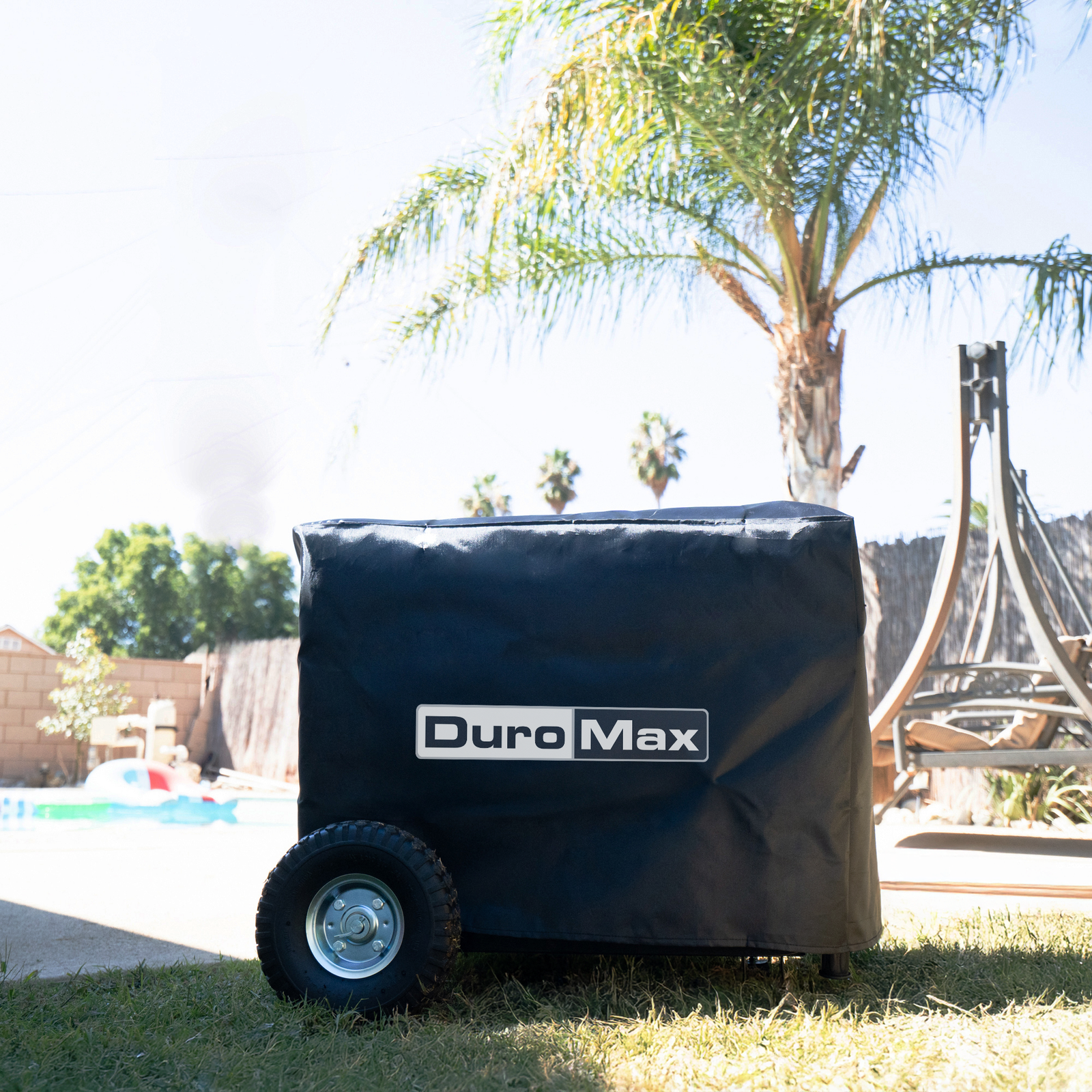
5,500W peak / 4,500W running. Dual fuel (gasoline or propane). Electric start. CO alert with automatic shutdown. GFCI-protected outlets. At 119 lbs, manageable for one person with the included wheel kit. Handles: refrigerator, freezer, sump pump, furnace fan, LED lighting, and device charging simultaneously with headroom. For households that don’t need to run central AC, the XP5500EH covers all critical loads efficiently at a price point that makes the investment straightforward.
DuroMax XP10000EH — Best for Whole-Home Critical Backup
10,000W peak / 8,000W running. Dual fuel. Electric start with remote start capability. CO alert with automatic shutdown. Dual 120V/240V outlets including 30A and 50A receptacles for direct RV and transfer switch connection. At 237 lbs, it requires two people or a wheel dolly for positioning — plan the placement and access route before the generator arrives. Handles central AC (up to 3-ton), well pump, refrigerator, freezer, sump pump, and general household loads simultaneously. The most popular backup generator for serious preparedness at the residential level.
DuroMax XP13000EH — Best for Larger Homes and Dual AC
13,000W peak / 10,500W running. Everything the XP10000EH offers, stepped up for larger homes, homes with 4-ton AC systems, or households running additional high-draw loads. The extra 2,500W peak headroom prevents overload trips during the compressor starting surges that cause problems when a generator is sized too close to its rated output. At $1,399, the price premium over the XP10000EH is modest for the additional capability.
EcoFlow DELTA Pro — Best for Silent, Indoor-Safe Backup
3,600Wh capacity, 3,600W AC output. No engine, no fuel, no emissions, no noise. Safe for indoor use in any room. Charges from 0–100% in under 2 hours from wall outlet, or via solar panels (up to 1,600W solar input). Smart Home Panel 2 integration allows circuit-level control during outages. Expandable to 25kWh with additional battery packs for extended backup. Best for households prioritizing indoor-safe power for medical equipment, home offices, and sensitive electronics, or for use in noise-restricted environments.
The Transfer Switch: Do This Before You Need It
Connecting a portable generator to your home’s electrical system requires a transfer switch or generator interlock kit. These devices ensure that generator power and utility power cannot flow simultaneously — preventing the backfeed that can electrocute utility workers restoring power on the lines. Never use a double-male extension cord (“suicide cord”) — it’s illegal, dangerous, and a genuine cause of utility worker deaths during storm restoration work.
A generator interlock kit ($150–$400 installed by a licensed electrician) is the most affordable and code-compliant solution for most residential applications. It physically prevents both the main utility breaker and generator breaker from being on simultaneously. Installation typically takes 2–4 hours. Schedule this before storm season — electricians are unavailable during and immediately after major storms.
Fuel Storage and Seasonal Preparation
For gasoline-powered generators: treat stored fuel with STA-BIL 360 Protection (prevents oxidation and varnish formation for up to 24 months). Store in approved metal or HDPE containers, maximum quantities per local fire code (typically 25 gallons for residential). Rotate fuel every 3–6 months without stabilizer, annually with stabilizer. Run the generator under load for 30 minutes at the start of each storm season to verify performance before you need it in an emergency.
For dual-fuel generators: propane is the storage-free solution. Propane doesn’t degrade, requires no stabilizer, and can be supplied from existing 100–500 gallon home tanks via a generator-compatible hose. For families with existing propane service, a dual-fuel generator running primarily on propane eliminates all gasoline storage obligations.
Browse DuroMax, DuroStar, EcoFlow, and Anker backup power solutions at Pro Tools Hub — with expert sizing guidance to match your household’s specific needs to the right generator.