Whole-House Backup Power: What You Actually Need
When a major storm knocks out power for days — or weeks — a whole-house backup generator can be the difference between comfort and crisis. But sizing one correctly is the most critical and most misunderstood step. Too small and you’ll overload it; too large and you’ll waste thousands of dollars. This guide walks you through the exact process.
Calculate Your Wattage Requirements
Start by listing the appliances you need to run simultaneously. Here are typical starting and running wattages for common household loads:
- Central air conditioner (3-ton): 4,500W running / 13,500W starting
- Well pump (1HP): 1,000W running / 2,000W starting
- Refrigerator: 150W running / 600W starting
- Freezer: 100W running / 500W starting
- Sump pump (1/2HP): 800W running / 1,300W starting
- Furnace fan: 600W running / 1,000W starting
- Microwave: 1,000W running
- Lighting (LED, whole house): 200–400W running
Add your running watts, then add the single highest starting watt load on top. That total is your minimum generator output requirement. For a typical family home running AC, a well pump, refrigerator, and lights, you’re looking at 10,000–15,000W (10–15 kW).
Standby vs. Portable: The Key Decision
A standby generator (Generac, Kohler, Briggs & Stratton) connects permanently to your home’s natural gas or propane supply and starts automatically within 10 seconds of a power outage. They run on propane or natural gas — no fuel storage, no refueling. Sizes from 10kW to 24kW cover most residential needs. Cost: $3,000–$6,000 installed.
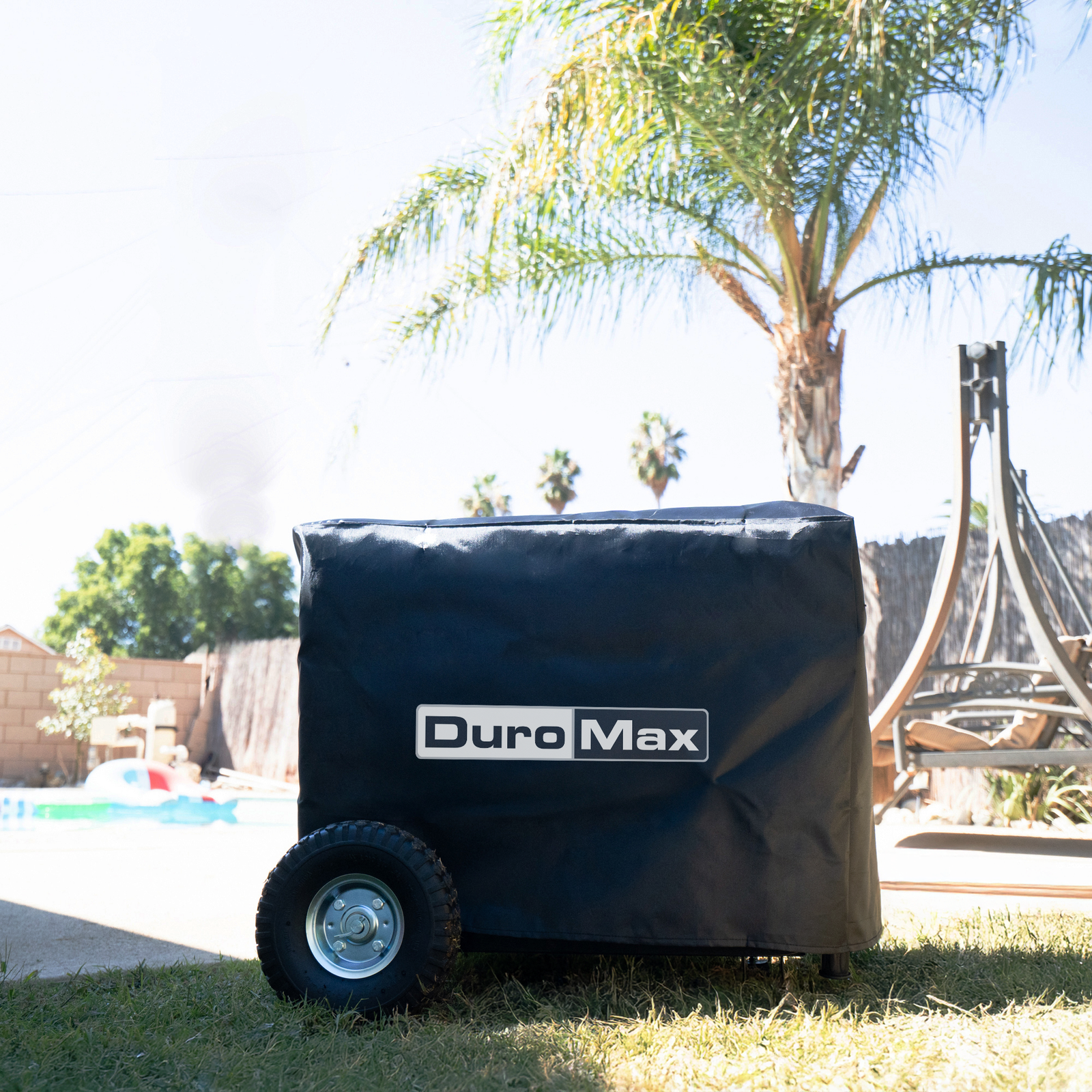
A portable generator (DuroMax XP13000EH, Honda EU7000is) requires manual starting, fuel storage, and a transfer switch or interlock kit for safe connection. Far more affordable ($800–$2,500) but requires more management during outages.
Top Picks for Whole-House Backup
DuroMax XP13000EH — 13,000W peak / 10,500W running, dual-fuel (gasoline or propane), electric start, EPA-compliant. One of the best value whole-house portable generators available. Handles central AC, well pump, and major appliances simultaneously.
DuroMax XP15000EH — Steps up to 15,000W peak for larger homes or homes with larger AC units. Same dual-fuel flexibility and solid DuroMax reliability.
Brave PRO 12000W Generator — Heavy-duty professional-grade portable with a 457cc engine, electric start, and GFCI-protected outlets. Built for extended runtime in demanding conditions.
Transfer Switch: Non-Negotiable
Never connect a generator to your home’s wiring using a double-male extension cord (“suicide cord”). This backfeeds power into utility lines and can kill lineworkers. Install a transfer switch or generator interlock kit — a licensed electrician can install an interlock kit for $200–$400, which is by far the safest and most legal approach.
Fuel Storage and Runtime
At 50% load, a 10,000W generator typically burns 0.7–1.0 gallon of gasoline per hour. For a 72-hour outage, plan on 50–72 gallons of stabilized fuel. Dual-fuel models give you the flexibility to use propane from existing tanks, eliminating the storage challenge entirely.
Browse the full lineup of whole-house and portable backup generators — including DuroMax, DuroStar, and Brave models — at Pro Tools Hub.