M12 vs M18: Two Platforms With Different Purposes
Milwaukee operates two distinct professional battery platforms — M12 (12V) and M18 (18V). Unlike some brands where the compact platform is a budget entry point into a single ecosystem, Milwaukee’s M12 is a genuine professional platform in its own right, with over 100 dedicated tools that do things the M18 platform can’t. Here’s how to decide which platform fits your work — or whether you need both.
What M12 Does Best
M12 excels in three areas: compact size (M12 tools fit in spaces M18 tools cannot reach), light weight (M12 tools reduce fatigue for all-day overhead and one-handed work), and trade-specific tools that have no M18 equivalent.
The M12 ecosystem includes tools unique to specific trades: the M12 ProPEX expansion tool for plumbing, the M12 soldering iron, the M12 PVC pipe shear, the M12 inspection camera, the M12 cordless ratchet (critical for automotive and mechanical work), and the M12 heated gear line. These tools don’t have M18 versions because the compact size IS the feature — a 12V ratchet is useful precisely because it fits where an 18V tool won’t.
What M18 Does Best
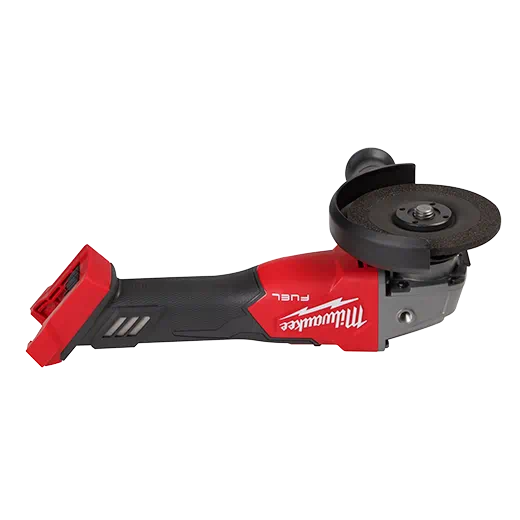
M18 — particularly M18 FUEL — delivers professional-grade power for demanding applications: framing nailers, 7.25″ circular saws, SDS rotary hammers, large grinders, band saws, and the full range of structural and heavy-duty tools. M18 HIGH OUTPUT batteries push performance to near-corded levels. For sustained heavy-duty work where maximum power matters more than compact size, M18 is the platform.
Battery and Charger Compatibility
M12 and M18 batteries are NOT cross-compatible — they use different form factors and voltages. You need separate chargers for each platform. Milwaukee offers combo chargers (M12/M18 simultaneous) that reduce the charger count for users running both platforms. This is a meaningful consideration if you’re managing both systems in a van or truck.
Running Both Platforms
Many professionals — especially electricians, plumbers, and HVAC techs — run both platforms simultaneously. The typical setup: M18 FUEL for power tools (drill, impact, grinder, reciprocating saw) and M12 FUEL for compact tools (right-angle drill, ratchet, inspection camera, pipe shear). This combination gives you the best of both worlds but requires managing two battery ecosystems.
Cost Considerations
M12 batteries and tools are generally cheaper than M18 equivalents. For professionals who want to minimize the battery investment while getting into the Milwaukee ecosystem, starting on M12 for light work and adding M18 for power tools is a practical cost-management approach. M12 2Ah batteries run $30–40; M18 5Ah batteries run $80–$120.
The Recommendation
For electrical, plumbing, HVAC, and automotive trades: Start with M12 FUEL, add M18 FUEL for heavy applications. For construction, framing, remodeling: Start with M18 FUEL as the primary platform; add M12 only if compact specialty tools become relevant. For general contractors managing multiple trades: Both platforms eventually — but build M18 first.
Find Milwaukee M12 and M18 tools, batteries, and chargers at Pro Tools Hub.